Last updated November 18, 2026


Free written scope consultation - allowances, timeline, and change-order rules on paper before a single trade is scheduled
The Complete Driveway & Pavers Guide for Costa Mesa Homeowners
Most Costa Mesa driveways fail at the base, not the top. Yet nearly all the research a homeowner does before a driveway project focuses on which paver looks best in a photo. The result is a surface that photographs beautifully for two seasons and then starts rocking, settling, or shedding sand at the edges. In a city where the marine layer keeps the ground damp well into the morning and clay-heavy soils expand and contract with the moisture, the layers you never see do most of the work. This guide treats the driveway as a system: base, drainage, edge restraint, and surface. You’ll learn what the soil under a Costa Mesa driveway actually demands, how to read a bid, and how to tell a complete scope from a cheap one. Costa Mesa deserves better than a pretty topcoat over a shallow base.
Quick Answer
Driveway pavers in Costa Mesa need a deeper compacted base than most standard specs call for, proper edge restraint, and a drainage plan that accounts for both clay soils and the coastal marine layer. Choosing between interlocking concrete pavers, travertine, and porcelain matters, but base depth, slope away from the garage, and the driveway-to-garage transition decide whether the surface lasts. Get the system right and the pavers will look good for years; get it wrong and no paver brand will save the job.
Styles & brands we work with
- Kitchen remodeling
- Bathroom remodeling
- Home additions & ADU
- Roofing
- Windows & doors
- Driveway & pavers
- Fence
Table of Contents
- Why a Costa Mesa Driveway Is a System, Not a Surface
- The Clay Soil Problem: Why Base Depth Matters Here
- Interlocking Concrete Pavers vs. Travertine vs. Porcelain
- HOA Setbacks and Permeable Surface Requirements in Costa Mesa
- The Driveway-to-Garage Transition: Where Driveways Fail
- How to Read a Paver Bid Beyond the Price
- How a Proper Paver Driveway Goes In: Step by Step
- Caring for Pavers in a Coastal UV Environment
Why a Costa Mesa Driveway Is a System, Not a Surface
A driveway is a stack. At the bottom is native soil, then a compacted aggregate base, then a bedding layer, then the pavers, then joint sand. Each layer has a job: the base spreads load, the bedding levels, the pavers wear, the sand locks. When any one layer is wrong, the surface above it tells you. The pavers settle in a low spot. Sand washes out at the edge. A paver lifts when your tire rolls over it. None of those symptoms are actually about the paver.
In Costa Mesa, this stack has to do more work than it would in a drier inland market. The ground here stays hydrated through long stretches of morning marine layer before the sun burns it off. That moisture sits in the clay soils that sit under much of the city. When that ground takes on water and then dries out, it moves, and it doesn’t move evenly. A base built too shallow, or built without adequate compaction, lets that movement telegraph straight up into the finished surface.
So the question isn’t only “which paver?” It’s “which paver, over which base, restrained by what edge, sloping where?” A driveway that gets the whole stack right is what we mean when we say built to the brand’s standard, not just the minimum code. The pavers you see are a small part of the total cost of a driveway that holds up. That’s also why we bring hardscape depth from the leading paver lines – Belgard, Unilock, Techo-Bloc, Tremron, and Cambridge Pavers – rather than a single catalog, because the right surface choice depends on the whole assembly beneath it.
The Clay Soil Problem: Why Base Depth Matters Here
Expansive clay soils are the single most important local factor in paver performance, and it’s the one most generic paver guides never mention. Clay swells when it takes on water and shrinks as it dries. Under a driveway, that swelling and shrinking produces cycle after cycle of slight vertical movement. A base that’s thick enough to distribute load across that movement protects the pavers; a thin one lets the clay push right through.
The key word is depth, and depth is where bids diverge. A standard paver base that performs in a stable, sandy inland soil often isn’t deep enough to manage the same loads over expansive clay, especially in a driveway that carries daily vehicular weight. The base has to be excavated to the right depth, laid in the right lifts, and compacted properly at each stage – compacting one thick layer instead of several thinner ones is one of the fastest ways to create future settlement. That’s before any question of which paver goes on top.
What you want in a Costa Mesa driveway:
- Proper excavation depth that removes organic material and reaches a stable subgrade before base goes in.
- Aggregate base laid in controlled lifts and compacted at each lift, not dumped and smoothed once.
- Verification of compaction before the bedding layer goes down, because a base that feels firm underfoot isn’t proof it’s right.
- Grade that drains away from the structure and doesn’t pond at the edges or the low point.
We don’t publish a single “correct” base depth for every Costa Mesa driveway, because the right number depends on your specific soil, drainage, and traffic. The honest answer: a contractor should be able to tell you what they found under the existing surface and why their base spec fits that condition. If a bid quotes you a base depth without a word about soil, that’s a red flag. The same full-scope mindset applies across the exterior of the house, from the roof down to the driveway, which is why a single-source approach to the whole exterior often saves homeowners from coordinating three different trades who each blame the next for a failure.
Interlocking Concrete Pavers vs. Travertine vs. Porcelain
The three materials homeowners ask about most in Costa Mesa behave very differently in the local environment. Here’s the short version before the detail.
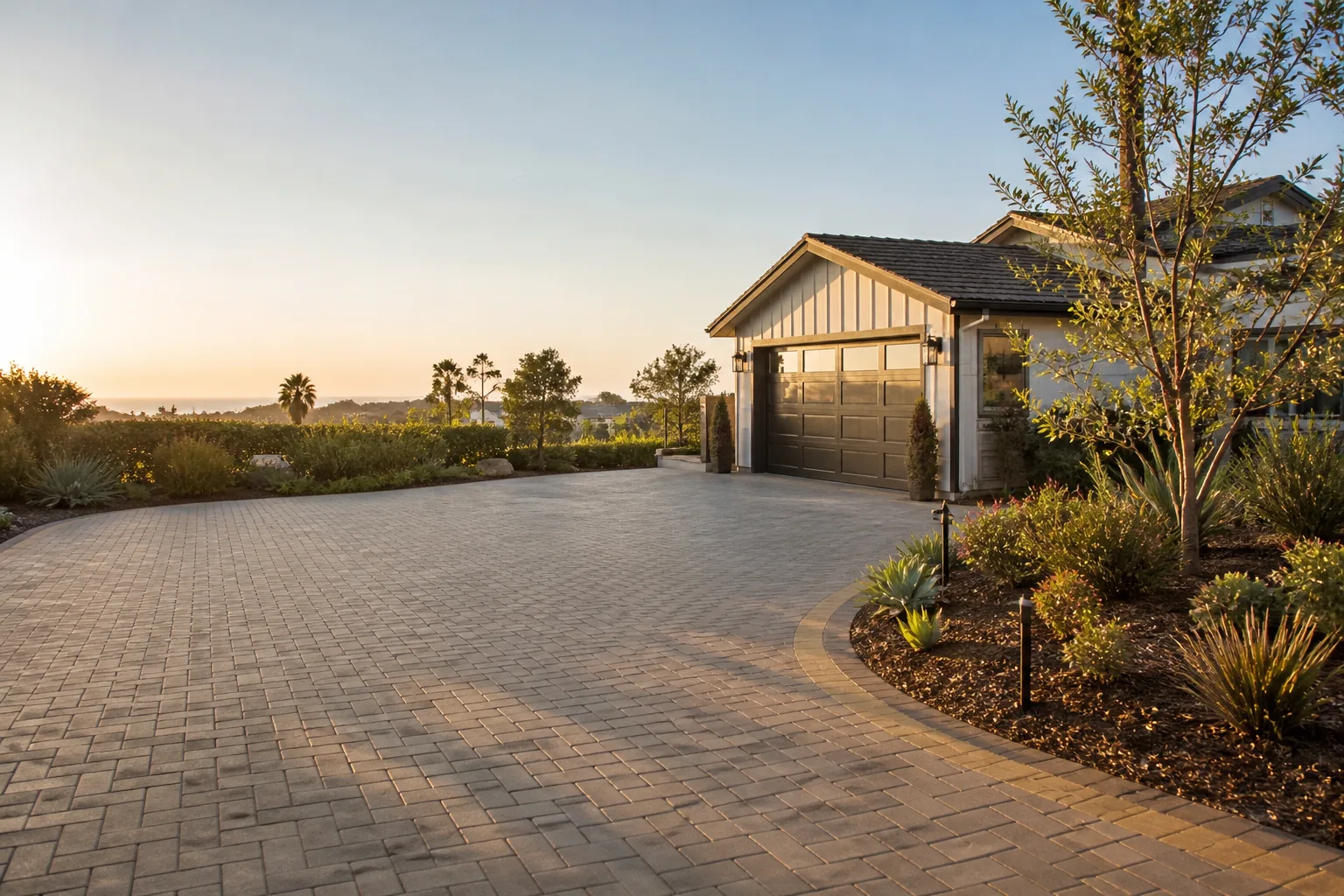
- Interlocking concrete pavers – the workhorse. Dense, impact-tolerant, and forgiving of minor subgrade movement because the joints flex slightly as a system. Manufactured in dozens of shapes and colors. Best all-around choice for a driveway that gets real vehicle traffic.
- Travertine – a natural stone with a beautiful, cooler-toned look. Softer and more porous than concrete pavers; it can stain and etch, and it needs more care under tires and dropped tools. Beautiful for courts, entries, and low-traffic areas; a higher-maintenance call for a daily-use driveway.
- Porcelain – extremely hard, dense, and color-stable. It resists staining and fading well and holds its finish under UV. It’s also thinner and more brittle than concrete pavers and demands a very careful, well-compacted bedding and base; installation quality matters more than with any other option. Costs tend to run higher.
Under the coastal UV and moisture of Orange County’s near-coast neighborhoods, fade resistance and stain resistance matter, and all three materials vary in how they handle both. Concrete pavers from a quality line hold color well and shrug off the damp; travertine wants sealing and care; porcelain stands up to UV and staining but punishes poor installation. Match the material to the traffic and the maintenance you’re willing to do. A travertine or porcelain surface over a shallow base is money spent on the wrong layer.
HOA Setbacks and Permeable Surface Requirements in Costa Mesa
In a city as HOA-dense as Costa Mesa, the surface you choose can be constrained before you buy a single paver. Many HOA-governed communities – and there are a lot of them in and around Costa Mesa – have architectural review rules that cover driveway color, material, width, and sometimes a required percentage of permeable surface. A paver driveway in one neighborhood can be a flat no two streets over. The rules live in your community’s CC&Rs and architectural guidelines, not on a city website, so read them before you design.
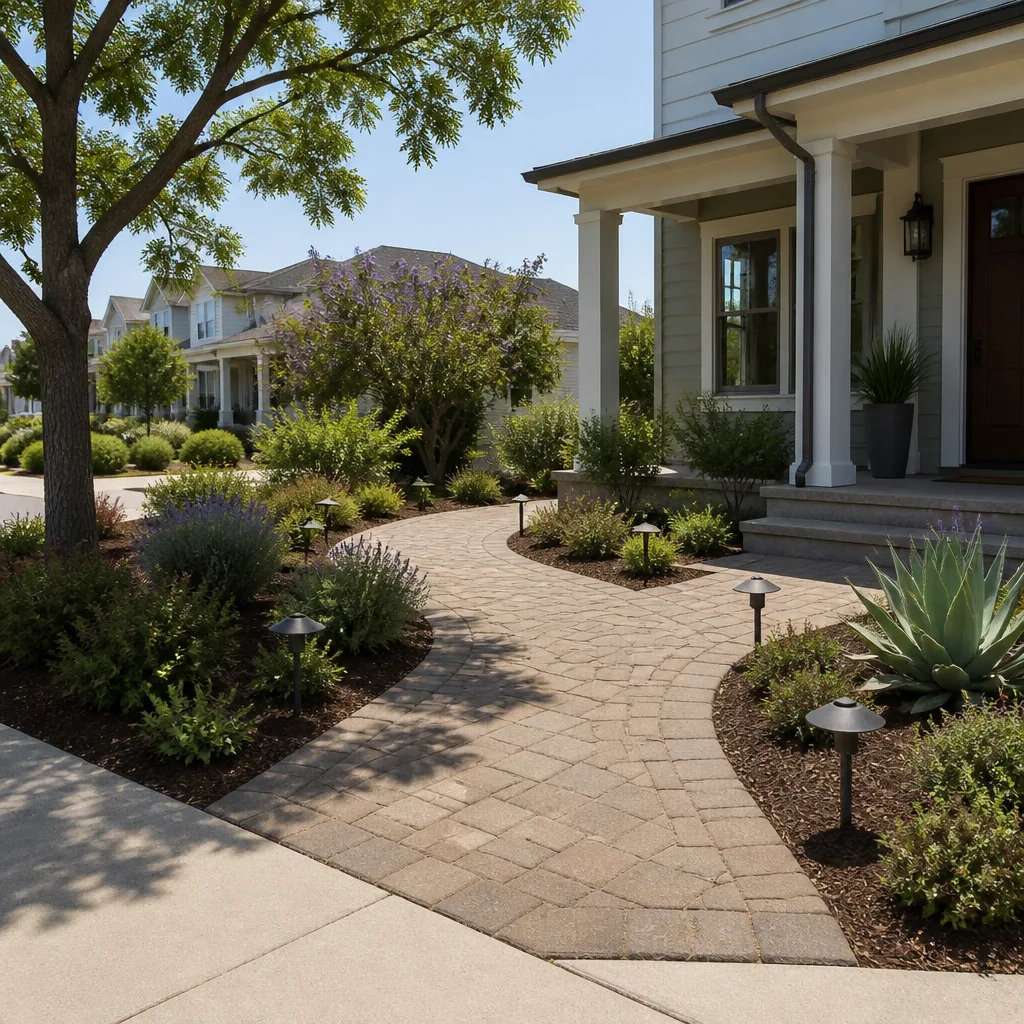
Permeable surfaces are the other consideration. Permeable pavers, permeable joint systems, and open-graded base designs let water move through the driveway rather than sheeting off it, which matters in a city where hard surfaces already cover a lot of ground. Whether your driveway needs to be permeable, and by how much, depends on your HOA and on what the city’s building department requires for your specific lot and grading. Most cities require a permit for changes that affect grading, drainage, or the public right-of-way; ask your city’s building department directly about your property, and get the answer in writing.
What to confirm before you commit to a design:
- Your HOA’s approved paver colors and materials, from the architectural guidelines.
- Whether the community requires a minimum permeable surface percentage, and how it’s verified.
- Any setback or widening limits on your driveway apron and the transition to the street.
- Whether your project needs a city permit for grading or drainage, and who pulls it.
- Approval documentation from the HOA in hand before excavation starts.
Getting these settled early is cheaper than discovering them mid-project. If your project expands beyond the driveway to a whole-exterior plan, the same rules will govern a fence installation and any other hardscape on the property, so it pays to map the property’s rules once.
The Driveway-to-Garage Transition: Where Driveways Fail
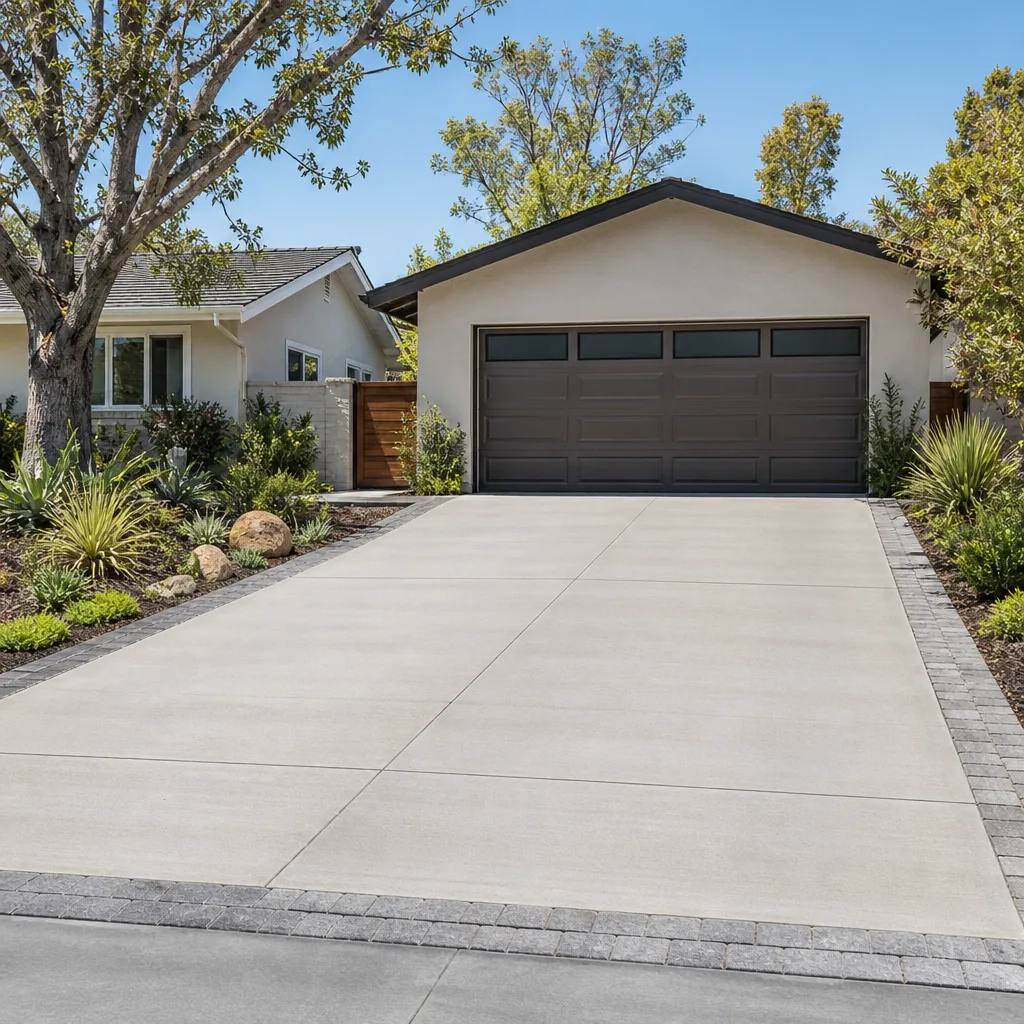
Ask an experienced paver installer where driveways fail and you won’t hear “the middle.” You’ll hear “the garage.” That transition is where the driveway’s slope meets the structure, where water either manages to drain away or finds its way in, and where small grade errors show up as a puddle at the garage door, a gap at the threshold, or a lip that trips every car in the house. It’s also the spot most often rushed at the end of a job.
Three things decide whether that transition holds up:
- Positive slope away from the garage – the finished surface should shed water away from the door and the threshold, not toward them. Too flat, and water ponds; sloped the wrong way, and it runs at the door.
- Correct threshold height and flashing detail – the paver edge must sit at the right relationship to the door’s sill, and the flashing and trim behind the threshold have to be detailed so water can’t get behind the assembly. This is the joinery between the driveway and the house, and it’s where the paver trade and the rest of the exterior trade have to talk to each other.
- Edge restraint at the transition – the edge restraint isn’t decoration. It’s what keeps the surface from spreading at the highest-load, highest-movement point in the driveway.
When the driveway, the threshold, and the exterior drainage are one scope of work, the transition detail gets designed rather than improvised. That’s a reason we treat the exterior as one system: driveway & pavers work sits right next to the door, the trim, and the drainage, and the details between them are exactly where things go wrong.
How to Read a Paver Bid Beyond the Price
The biggest mistake homeowners make in a driveway project is comparing bids on the total number instead of the scope behind it. Two bids can look similar at the bottom and describe completely different jobs in the middle. The low bid often wins because it quietly left out excavation depth, compaction, edge restraint type, or proper base sand. Here’s what a complete scope of work should itemize, so you can compare apples to apples.
- Excavation and disposal. Depth of excavation, whether the old surface is removed and hauled, and what happens to the spoil.
- Base specification. The aggregate type, the number of compacted lifts, and the compaction method. Ask for base depth explicitly.
- Bedding layer. What material and thickness the pavers are set into, and how it’s screeded.
- Edge restraint type. What holds the perimeter, and how it’s anchored, especially at the garage and street ends.
- Joint sand spec. The type of sand in the joints, and whether it’s the right grade for your system, including permeable assemblies if you have one.
- Drainage and slope plan. Where water goes and how it’s graded to get there.
- Permits and HOA approval. Who pulls what, and whether the quoted price includes that work.
- Warranty terms. What’s covered, for how long, and by whom, and whether the paver manufacturer’s warranty is system-matched to the installation.
A bid that itemizes these is written to be answered; one that only totals a number is written to be signed. Construction Costa Mesa builds driveways as part of a full residential scope, so the transition between the driveway, the front entry, and the rest of the exterior is already a known detail. Our technicians have up to 11 years of experience, and the point of a written, itemized quote is that you can see exactly what the price covers.
How a Proper Paver Driveway Goes In: Step by Step
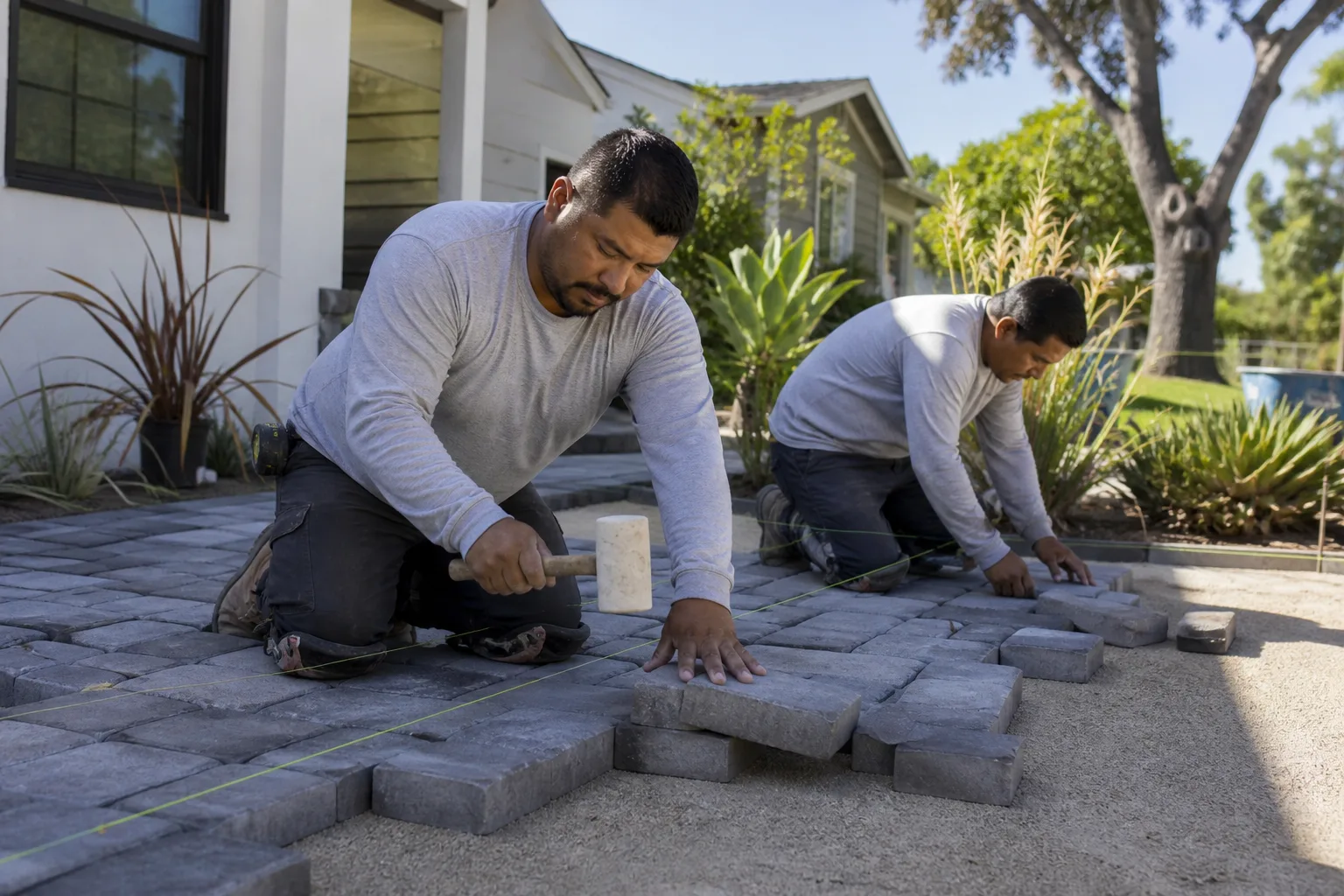
The sequence below is the general path a well-run paver driveway follows. It’s here so you understand the process and the checkpoints, not so you start digging. The compaction, excavation, and edge-restraint detail is skilled work, and a driveway’s base is unforgiving of shortcuts.
- Site review and layout. Measure, map drainage and grade, confirm HOA and permit requirements, and mark out the driveway limits.
- Demolition and excavation. Remove the existing surface and subgrade material to the designed depth, keeping the subgrade stable.
- Subgrade preparation. Shape and compact the exposed soil so the base sits on a stable, correctly graded bed.
- Base installation. Bring in aggregate base in controlled lifts, compact each lift, and check grade as you build up.
- Edge restraint. Set and anchor the perimeter restraint so the pavers are held tight at the edges and at the garage.
- Bedding layer and screeding. Spread and screed the bedding sand to consistent thickness and slope.
- Paver laying. Set the pavers to the pattern, checking line and grade as the field goes in, and cut and fit at edges, corners, and the garage threshold.
- Joint sand. Sweep the joint sand in and compact the surface so the field locks and the joints fill.
- Final clean and check. Clean the surface, verify slope and drainage, and walk the garage transition and edge restraint closely.
Those steps are also the basis of a good inspection: ask where each one happened and see it. Interested in what the whole exterior looks like when it’s planned this way? The home additions & ADU planning process has the same early site and grading review, because additions and hardscape both start in the ground.
Caring for Pavers in a Coastal UV Environment
After the driveway goes in, keeping it looking right is mostly about water and joints. In Costa Mesa’s near-coastal air, the driveway spends more of the day damp than a driveway inland would. That favors moss and algae growth in shaded joints and increases the importance of good drainage and joint management. A few reliable habits keep a paver surface in good shape:
- Keep joints full. Joint sand is part of the system; refill as it works loose so the pavers stay interlocked and water doesn’t get under the surface.
- Spot-clean stains promptly. Tire marks, oil, and leaf tannins stain more readily when left in the damp.
- Manage shade and moisture. Where the driveway sits in the marine layer’s shadow much of the morning, watch for algae and treat it before it’s a slipping hazard.
- Respect the sealer question. Sealing a paver surface can help with stain resistance and color, but it’s not a universal need and not the fix for a settlement problem. Ask whether your paver line and system want it, and get the manufacturer’s guidance, not one generic answer.
- Watch the garage transition and edges. If you see a gap, a lip, or a puddle there, that’s the first place to look, not the last.
Because we specify with the hardscape manufacturer’s installation requirements in mind, the care routine fits the paver system you actually own. That’s the difference between built to the brand’s standard and a surface that only looks the part on day one.
Common Mistakes to Avoid
- Choosing the paver before the base. Picking a color and pattern from a showroom photo before anyone’s looked at your soil and grading puts the decision in the wrong order. Base and drainage decide whether the pretty surface survives.
- Accepting a shallow, unmentioned base depth. Over Costa Mesa’s expansive clay, a base that would be fine on stable inland soil isn’t automatically fine here. Ask for the depth and the reason behind it.
- Compacting the base in one thick lift. Compaction in proper lifts is slow and looks like overkill. It isn’t. It’s the difference between a flat driveway and a settled one.
- Skipping the HOA review. In Costa Mesa’s HOA-dense neighborhoods, a paver material or driveway width that’s approved in one community can be rejected in another. Get the architectural approval before excavation, not after.
- Treating the garage transition as an afterthought. Slope, threshold height, and flashing at the garage door are the most common failure point on the whole driveway. Detail them on purpose.
- Ignoring edge restraint and joint sand specs. The perimeter restraint and the joint sand are structural parts of an interlocking system, not line items to shave. Cheap restraint and wrong sand cause spread and washout.
- Comparing bids on price alone. A bid is a description of work. If it doesn’t itemize base depth, edge restraint type, and sand spec, you can’t actually compare it to another bid.
See the difference
 Before
 After
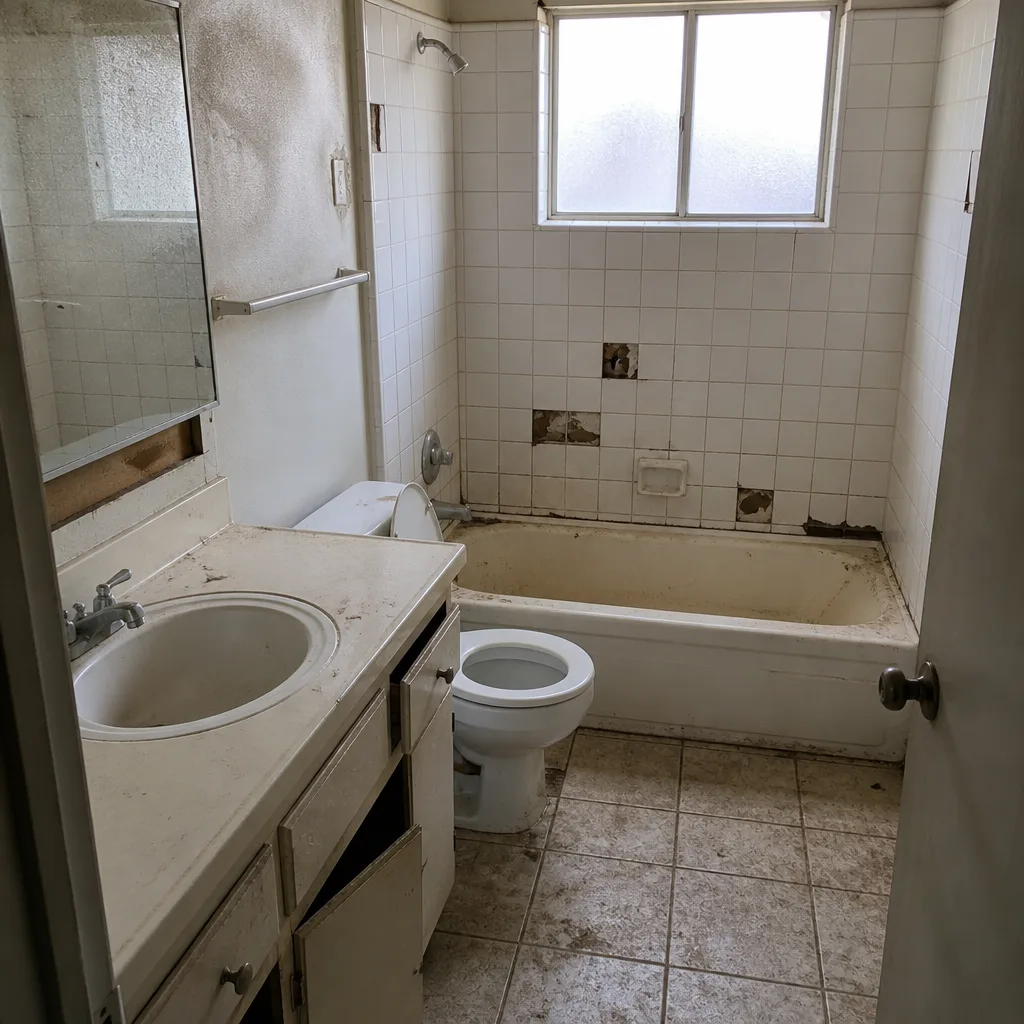 Before
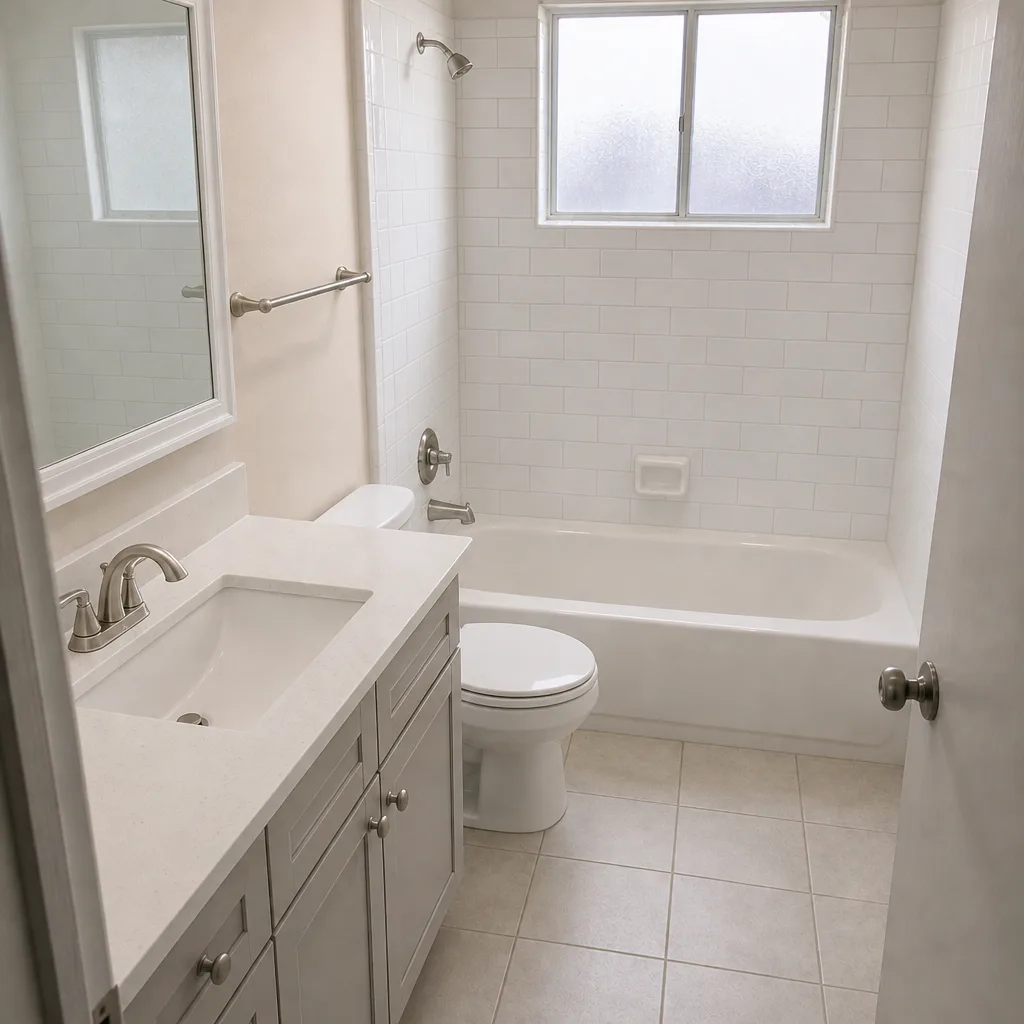 After
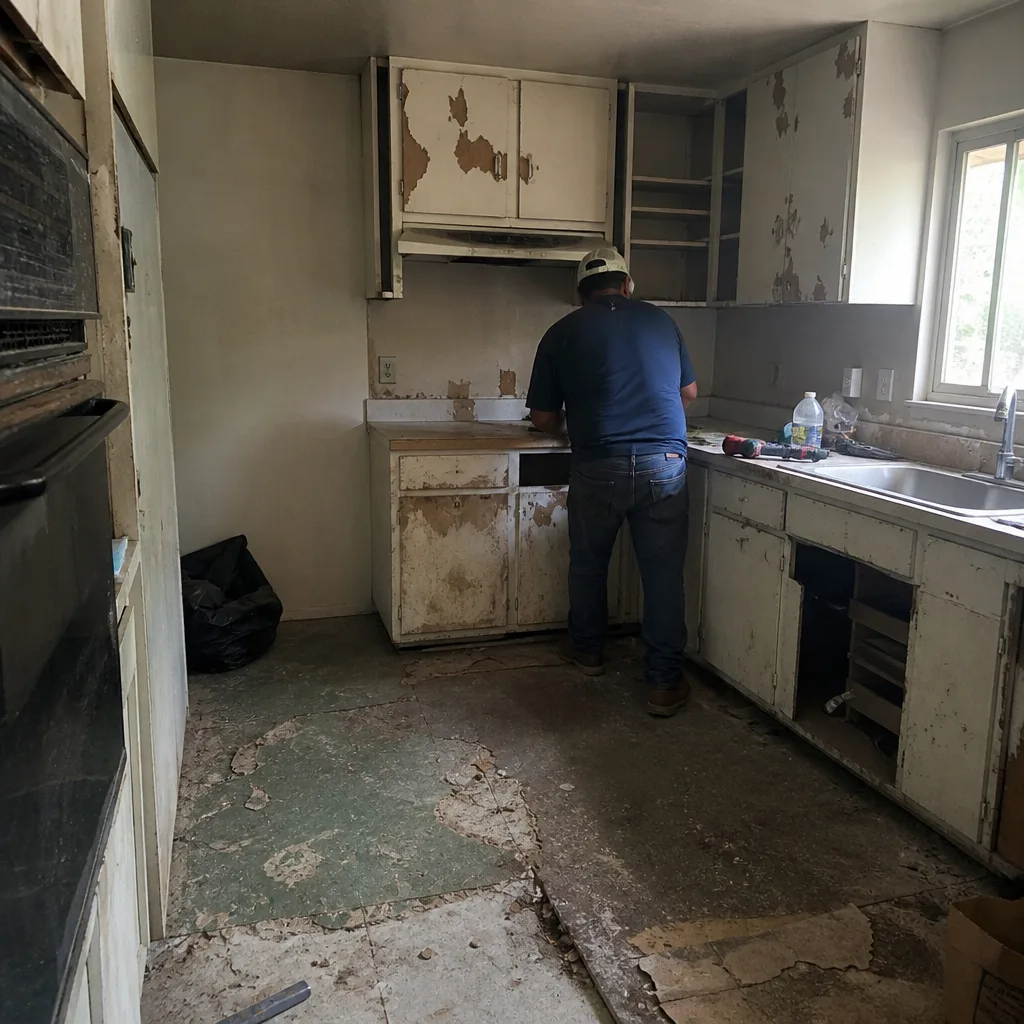 Before
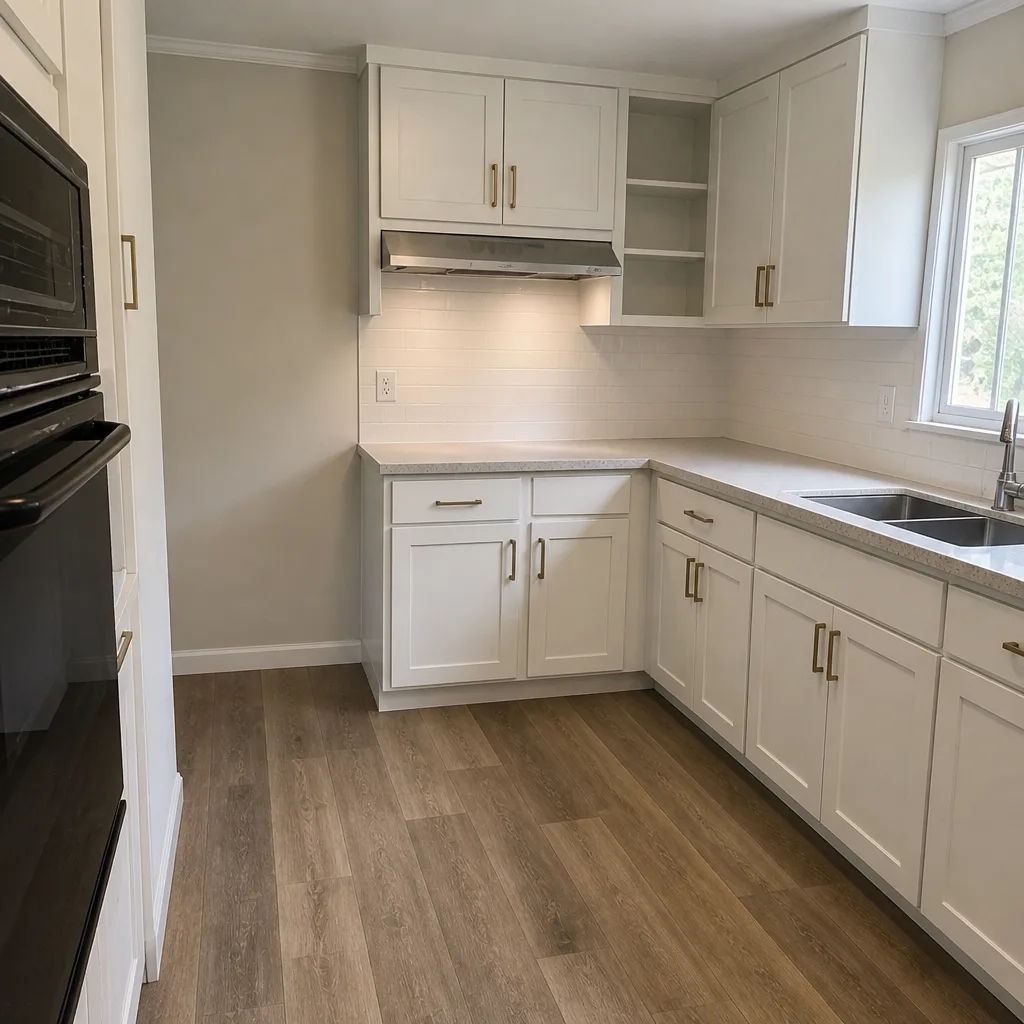 After
When to Call a Professional
Some paver questions are cosmetic. Others involve the ground under a structure, and those call for a professional. If your existing driveway shows settlement, rocking pavers, sand washing out, or water pooling at the garage door, the problem is almost always below the surface, and a surface fix won’t solve it. If you’re planning any grading or drainage change, a new driveway, or a hardscape that meets the house, those are jobs for someone who will evaluate the soil, design the base, and verify compaction. The same is true for anything touching the permit or HOA process. Construction Costa Mesa offers free estimates in Costa Mesa; call (855) 506-4558.
Frequently Asked Questions
Costs vary with material, base conditions, size, and drainage, so we set the price per job from a written, itemized estimate – and the estimate is free. The written estimate sets the final price, so we don’t publish a one-size-fits-all figure. Call (855) 506-4558 for an exact quote.
Because the clay-heavy soils under much of the city expand and contract with moisture, and the marine layer keeps the ground damp longer. A deeper, properly compacted base spreads vehicle load across that movement and keeps it from reaching the pavers. A shallow base that works on stable inland soil can settle here. The right depth depends on your specific soil and grading.
It depends on whether your project affects grading, drainage, or the public right-of-way, and HOA approvals may also apply. Most cities require a permit for grading or drainage changes, so ask your city’s building department directly about your property and get the answer in writing before work starts. We can walk you through the permitting and HOA requirements as part of a free estimate – call (855) 506-4558.
Not when the scope is written properly. A complete estimate itemizes base depth, edge restraint, sand spec, drainage, and permits up front so there’s no change order surprise when the excavation exposes unexpected soil or drainage. Ask any contractor what their change-order policy is. Ours is built into a fixed written scope – call (855) 506-4558 for your free quote.
Yes. We work with the leading paver lines – Belgard, Unilock, Techo-Bloc, Tremron, and Cambridge Pavers – so we can match your HOA’s approved color and material and specify the system to that paver line’s installation requirements. Bring your architectural guidelines to your estimate appointment.
Most paver driveways run about a week or more of active work, but the timeline depends on the size, excavation depth, base conditions, drainage, and weather. We’ll give you a realistic sequence in your written estimate rather than a made-up number. Call (855) 506-4558 to schedule a free estimate.
The Bottom Line
A Costa Mesa driveway is a system, not a surface. The clay under the city demands a properly excavated and compacted base, the marine layer makes drainage and joint management matter more, and HOA density means the rules can limit your material before you buy a thing. The driveway-to-garage transition is the most common failure point, and a complete bid that itemizes base depth, edge restraint, and sand spec is what separates a lasting driveway from a cheap one. Choose the right paver line, build the base to match your soil, and compare bids on scope. The surface will reward you for it for years.
Ready to price your driveway? Call (855) 506-4558 for your free estimate. One contractor, every phase, from the driveway to the doorway. We answer 24/7. Fast dispatch from 7am to 7pm, Sunday through Friday. Find more on our Construction Costa Mesa home page.
Written by the team at Construction Costa Mesa.